Deliver Better Patient Care with Remote Patient Monitoring Services
Remote Patient Monitoring (RPM) enables healthcare providers to monitor patients’ health outside traditional clinical settings through connected medical devices. By collecting and reviewing real-time health data, providers can identify potential health concerns early, improve care coordination, and help patients manage chronic conditions more effectively.
- Patient Enrollment & Onboarding
- Connected Device Management
- Real-Time Health Data Monitoring
- Care Team Communication
- Monthly Patient Engagement
Is Your Practice Facing These Remote Patient Monitoring Challenges?
Facing These Remote Patient Monitoring Challenges?
Comprehensive RPM Solutions for Better Patient Care
Patient Enrollment
- Eligibility verification
- Patient consent
- RPM enrollment
Device Setup
- Device delivery
- Setup assistance
- Technical guidance
Health Data Monitoring
- Vital sign tracking
- Data collection
- Trend monitoring
Clinical Data Review
- Data analysis
- Risk assessment
- Progress review
Patient Engagement
- Health education
- Care reminders
- Monthly check-ins
Care Coordination
- Provider updates
- Care coordination
- Follow-up
Documentation Support
- Activity tracking
- Monthly reports
- Compliance records
RPM Program Management
- Billing support
- Claims Tracking
- Medicare compliance
A Simple Five-Step Remote Patient Monitoring Process
Our structured Remote Patient Monitoring process helps healthcare providers deliver proactive, data-driven care while improving patient engagement and supporting better clinical outcomes.
Practice Assessment
We evaluate your practice requirements and design a Remote Patient Monitoring program that aligns with your clinical and operational goals.
Patient Enrollment & Device Deployment
Eligible patients are enrolled, and connected monitoring devices are delivered with onboarding support.
Continuous Remote Monitoring
Patient readings are securely transmitted to the monitoring platform, where health data is reviewed and monitored for significant changes.
Clinical Review & Care Coordination
Providers receive actionable patient insights to support timely intervention and ongoing patient care.
Documentation & Billing Support
Why Choose PMBC for Remote Patient Monitoring
Certified coders trained across multiple specialties
Claims scrubbed and submitted within 24 to 48 hours of service
Real time reporting on claim status, denials, and collections
Dedicated account manager who knows your practice
AI-powered workflow automation for faster, more accurate billing
Reduced FTE costs with transparent, no-hidden-fee pricing
PMBC vs. the alternatives
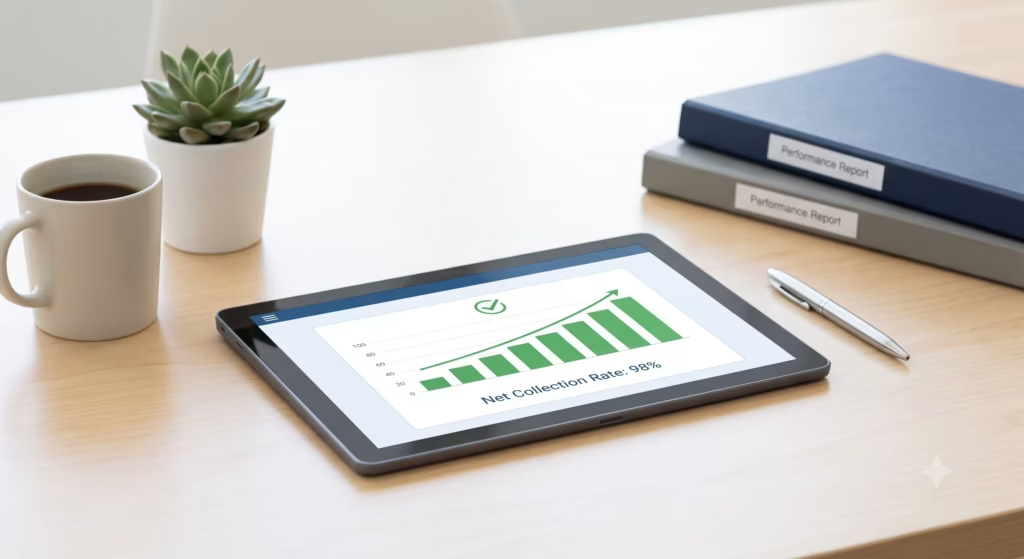
Actionable Insights for Better Patient Collection



What Our Customers Are Saying
Ammar Alobaidy, MD
Practice Administrator
Pankaj Jain, MD.
Habib U. Khan, MD
FAQ
01. What's the difference between medical billing and medical coding?
Coding translates clinical documentation into standardized codes that describe the diagnosis and services provided. Billing takes those codes and turns them into a claim that gets submitted to the payer for payment. They’re separate steps, but they need to be accurate together for a claim to get paid correctly.
02. How do you make sure claims are coded correctly?
Every claim is coded against current documentation and reviewed before submission. Our staff stays current on coding updates as they’re released, since a code that was valid last year can trigger a denial today if it hasn’t been updated.
03. How long does it take to get a claim submitted after a visit?
Claims are typically submitted within a few business days of the visit, once documentation and coding are complete. We don’t let claims sit in a queue, since faster submission generally means faster payment.
04. What happens if a claim is rejected before it's even submitted to the payer?
A rejected claim, one that never reaches the payer due to a formatting or data error, gets corrected and resubmitted right away. Catching these early means they don’t count against your denial rate with the payer.